


Languedoc Uncorked : Mas de Daumas Gassac
Updated: Jul 21

There are certain names that make wine lovers excited when it comes to Languedoc wines, and Mas de Daumas Gassac is one of them. I had recently enjoyed a bottle of the Daumas red 2022 with my dad (albeit opened a little too early in my opinion) and it made me want to discover the philosophy and wines of this iconic estate. Lucky for me, I live just five minutes away.
A pioneer of the Languedoc wine scene, Mas de Daumas Gassac helped change the perception of this region, proving that beyond its reputation for mass production, the Languedoc was capable of producing wines of quality, terroir and expression.
Driving down the beautiful winding road through vines and garrigue past emblematic domaines such as Grange des Pères, Mas de Daumas Gassac eventually comes into view. The driveway itself feels like an introduction to their philosophy with lavender flowers lining the path, butterflies and bumblebees everywhere and an immediate sense that this ecosystem has been carefully preserved.
A house search that became something else
Aimé Guibert had spent most of his working life running Guibert Frères, the family's glove and leather firm in Millau and suppliers to the British royal family for three centuries. Yet deep down, he'd always been drawn to the land.
While house-hunting for a family home, he and his wife Véronique, an ethnologist, came across a crumbling farmhouse and an abandoned watermill on the banks of the Gassac stream just outside the village of Aniane.. The property wasn't for sale, but through a twist of fate it eventually ended up in their hands. It had belonged to the Daumas family, whose name the estate still carries today. They had quietly farmed it for their own needs with a few olive trees, some vegetables, and a little wine. In 1971, the couple finally moved in, fulfilling a dream Aimé had carried for years.

The couple wanted to farm the land properly and make a living from it. Corn was their first idea, but the site's limited water resources quickly ruled it out. That left olives or vines. The decision was ultimately made after a visit from their friend Henri Enjalbert, professor of geography at the University of Bordeaux and one of France's leading authorities on the relationship between soil and wine.
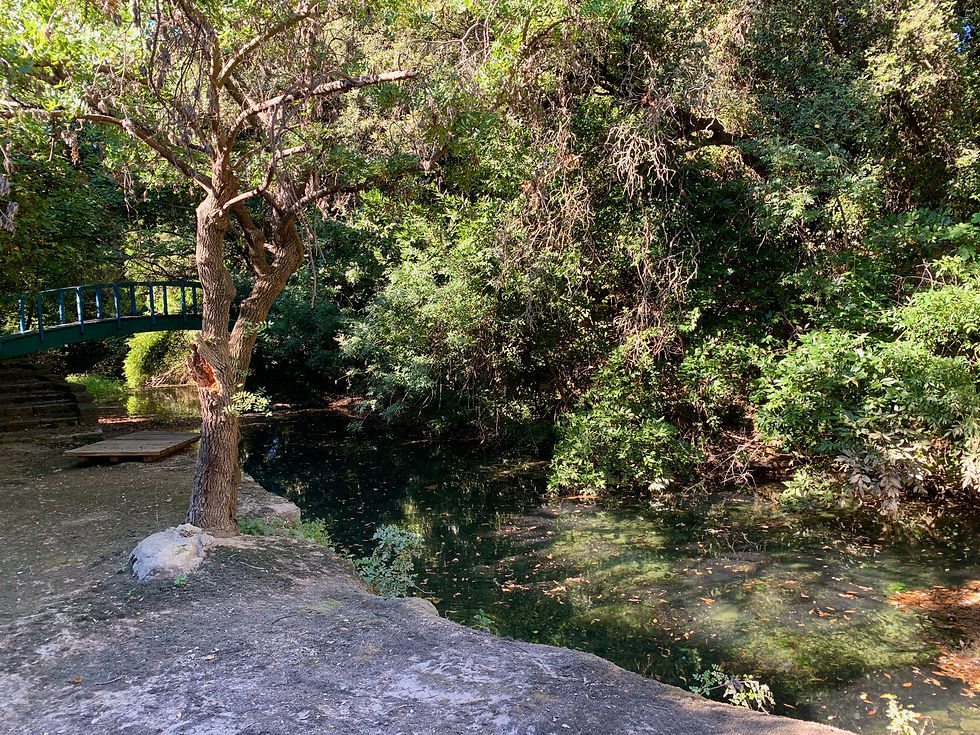
After walking around the property, Enjalbert declared the soils exceptional, comparing parts of them to the finest terroirs of Burgundy's Côte d'Or. Combined with the cooling influence of the Gassac stream, natural springs, and a microclimate shaped by the surrounding mountains, he believed the site was capable of producing truly great red wines. He even suggested it had the potential to become a Grand Cru, though perhaps only in a hundred years' time.
That was all the confirmation the couple needed. They would plant a vineyard.
Building a Grand Cru where no one expected one
In 1972, the estate was founded. Cabernet Sauvignon became the backbone of the red, chosen over the Pinot Noir they'd first considered. Tannat and Malbec followed, and then, as the Guiberts began travelling and meeting people in the wine world, things got more adventurous with Nielluccio from Corsica, Montepulciano from Italy, Saperavi from Georgia. Today there is a wide variety planted for the reds alone, a collection built the way you'd build a personal library, one interesting find at a time, by two people who'd never worked in wine before and had nothing to unlearn.
It wasn't easy to be taken seriously as a Cru in a region built on volume, so the next bold move was bringing in Émile Peynaud, the era's most distinguished oenologist, to guide that very first vinification. It required significant persuasion before he agreed to get involved.
Their first vintage was born in 1978, but it wasn't released until 1980, after two years in barrel. Selling it wasn't easy at first, a Vin de Table priced like a Cru was a hard sell in a region known for bulk wine, not quality. It took perseverance, but over time, it worked and today they're considered one of the pioneers of the modern Languedoc.

The whites came later, in the 1980s, built around Viognier, Chardonnay and Petit Manseng, with Chenin added further down the line to complete the four varieties that now make up around 90% of the Daumas Gassac white. The remaining 10% brings together eight other varieties, including Marsanne, Roussanne, Petit Courbu and other rare grapes that add further complexity.
Mas de Daumas Gassac : A tryptich estate
Gassac today isn't really one wine story, it's three, layered on top of each other over fifty years.
Mas de Daumas Gassac is the original, the red and white built from the panoply of varieties, grown in Aniane today, vintages going all the way back to 1978.
Moulin de Gassac, created in the 1990s, is the more accessible, wider-reaching range reds, whites and rosés, fruit-forward and easy to love, produced at the Cave Ormarine in Villeveyrac.

And then there's Atelier Guibert, created in 2020 in the middle of Covid, an experimental project led by the five Guibert brothers (the sons of Aimé and Véronique who now run the estate), each bringing their own instincts to it. It's a return to southern varieties only, Grenache, Cinsault, Mourvèdre, Carignan and Syrah, made with minimal intervention and barely any sulfites, on plots at Aniane set aside specifically for this range.
The estate describes it as a blank canvas still finding its shape, one that turns the historic diptych into a triptych. It's early days for this range, and the quantities are tiny, but you can definitely feel the freedom and vibrancy in the glass.
Micro-plots, forests, and playing with the wind
For the next two days I was in the car with Benjamin, who works on the estate. We drove through hills that, from the village of Aniane itself, give absolutely no hint of what's hidden in them. Plots tucked away everywhere, some newly planted, some pulled up and left to regenerate quietly, some simply beautiful vines fully in leaf.
The estate is split into 67 tiny plots at Aniane, most of them under a hectare, with a handful of buffer plots woven in between. The Guiberts even buy extra land just to plant forest on it, purely for the shade and coolness it brings, little pockets of woodland scattered through the vines like small oases. Walking through one of those wooded patches during my visit, I could genuinely feel the air change.
Standing in the vineyard, what strikes you first though isn't the vines, it's the sound. Cicadas, wind moving through trees, the general hum of an ecosystem going about its business. The whole philosophy here is built around working with nature rather than against it. It's easy to forget that all of it, every one of these plots, was once just garrigue and forest. In a strange way, it still feels like it. That's rather the point.
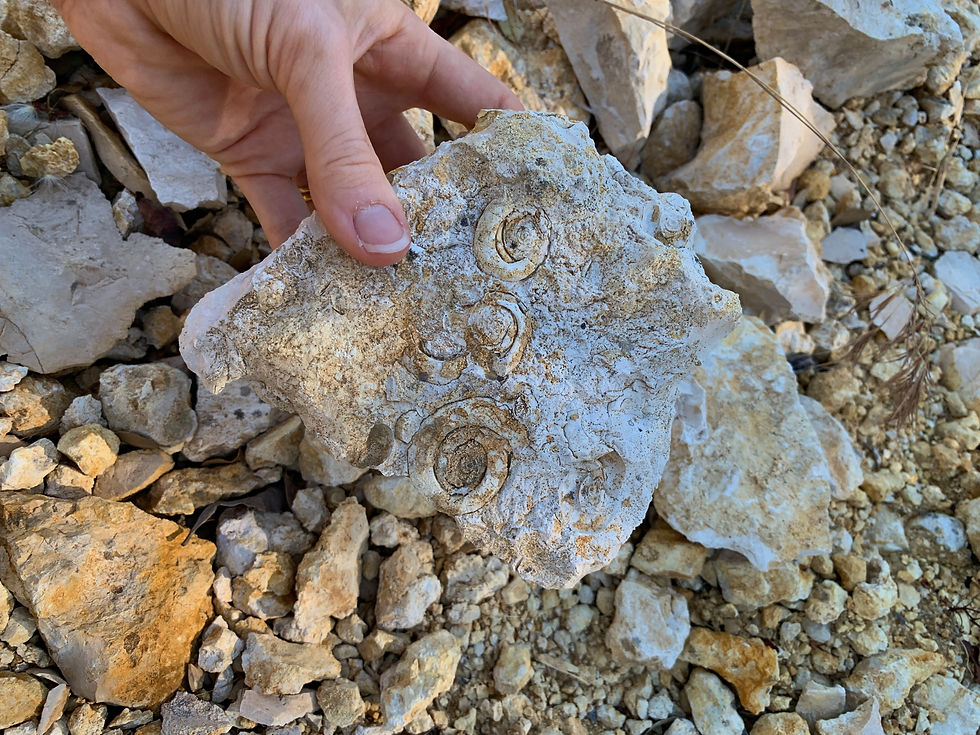
The soil itself is part of the magic, even if it doesn't look like much. A patchwork of clay, limestone, old glacial stone among others, often found together on the same plot. It's poor soil making them dig deep, which is part of what gives the wine its concentration.
Nature has its own cooling trick here too. Cold air rolls down from the Larzac plateau every night, so even in the height of summer, the vines get a proper chill after dark, one of the reasons Gassac's wines stay fresh even in hot vintages.
And tucked into all of this is a small piece of viticultural history. When the Guiberts first planted Cabernet Sauvignon here in 1972, they didn't use standard nursery clones. Instead, on a friend's advice, they sourced cuttings from vines planted in the 1930s and 40s at some of Bordeaux's finest estates, meaning a good part of this vineyard is, in effect, a living museum of pre-clone Médoc vines.
Certified organic, with biodynamic practices worked in, the whole approach here treats the vineyard less like an agricultural product and more like a living system they're gently steering.
Inside the cellar
Everything, red and white, is harvested entirely by hand. First to come in is the Cabernet Sauvignon destined for the Frizzant rosé, picked early, before too much ripeness sets in, landing around 11-12% alcohol.
Then the whites, roughly fifteen varieties, all vinified together as they arrive, picked over four to six days and kept cold to delay fermentation, with a light skin-contact maceration along the way for extra aromatic depth. Everything moves by gravity, from hand-sorted, fully destemmed fruit, pressed gently and fermented entirely in stainless steel, no malolactic, no lees aging, just freshness and fruit, filtered clean at the end.
The reds come last. The "collection" varieties are picked and vinified together first, with a shorter maceration built for fruit and freshness. But the Cabernet Sauvignon, the backbone of the Daumas Gassac red, always comes in last, from the oldest plots on the estate, sometimes waiting up to ten extra days for exactly the right ripeness. It's vinified entirely on its own, with macerations stretching up to a month, chasing structure and tannin.
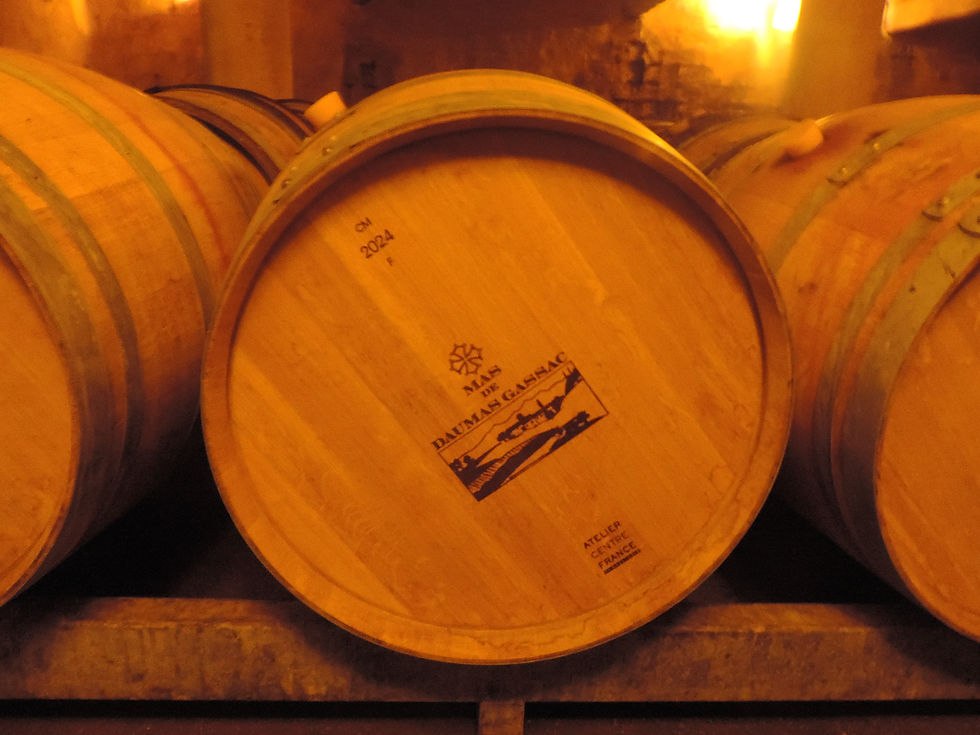
Once the Cabernet and the rest are blended, the wine spends 12 to 14 months in French oak barrels that get reused across up to seven vintages, and to avoid the oak dominating, only 70% of the blend sits in wood at any time, with the remaining 30% in stainless steel, periodically swapped through to keep things balanced.
The tasting
I tasted my way through wines from the whole range : two Moulin de Gassac whites, three Atelier Guibert reds, the Frizzant rosé, three vintages of Daumas Gassac red (2020, 2021, 2023), and then, saved deliberately for last as the estate always does, three vintages of the Daumas Gassac white (2022, 2023, 2024). Here are my favourites :

The Syrah, 2022, IGP Saint-Guilhem-le-Désert - Atelier Guibert, was fresh and vibrant with black fruits up front, a touch floral, garrigue and spice trailing behind. Lovely silky tannins. A wine full of personality and expression.
Then the Mas de Daumas Gassac Red 2023, IGP Saint-Guilhem-le-Désert - Cité d'Aniane (photo below). There was a moment of genuine emotion the second I put my nose in the glass. Young, not decanted, and already extraordinary. Powerful yet delicate, elegant, layered, deep. Blackcurrant and blackberry, ground black pepper, garrigue, a whisper of mocha, all held together with real freshness despite the intensity. Exuberant. You could open it tonight, especially a vintage like this one, or you could tuck it away for four or five years, even eight to ten and your patience would be rewarded.

And then, saved for last, the Mas de Daumas Gassac White 2024, IGP Saint-Guilhem-le-Désert - Cité d'Aniane. Viognier, Chardonnay, Petit Manseng and Chenin as the frame, filled in with Muscat Petit Grain and eight more rare varieties including Sauvignon, Marsanne, Roussanne, bourboulenc, Petit courbu and Sémillon. It's a cooler vintage, and it shows in the delicacy. It was genuinely like opening a bottle of perfume. Stone fruit, white flowers, a finish that just keeps going. It's one of those wines you don't forget.
What stayed with me most after the visit wasn't simply the quality of the wines, but the philosophy behind them. There's confidence without arrogance, ambition without haste, and the quiet understanding that every decision is made for vines that will outlive the people tending them. There's something about the place that's a little audacious, out of the ordinary, and that's exactly what expresses itself through the wine.
_________________________________________________________________________________ Disclosure: this visit was not commissioned. All thoughts and opinions expressed are my own.


Comments