


Languedoc Uncorked : Clos des Reboussiers in the Pic-Saint-Loup
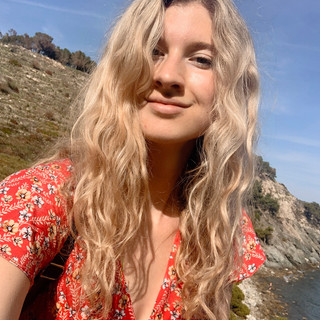
On a cold, sunny afternoon, driving up the road to Cazevieille with olive trees, Mediterranean vegetation, and vineyards guiding the way, and of course, the Pic Saint-Loup, our region’s unmistakable landmark watching over us, we approached our destination: Clos des Reboussiers.
Welcome to Languedoc Uncorked, a brand-new monthly series on Wine by Ana. Each month, I’ll take you with me to visit a different Languedoc winery, meeting the men and women behind the bottles, discovering their philosophy, and sharing the wines and stories that make this region, that I get to call home, so special.
And for the very first stop? Clos des Reboussiers in Pic Saint-Loup.
I tasted their wines at Millésime BIO earlier this year and instantly knew I had to visit. This felt like the perfect opportunity, and it was!

The Estate
Nestled at the foothills of the Pic Saint-Loup, Clos des Reboussiers is a family-run winery producing wines under the appellation of the mountain just above it: Pic-Saint-Loup. Founded in 1999, the estate entered a new chapter in 2020 when Jean-Pierre Girard took over and rebranded it as Clos des Reboussiers, while continuing the work begun by the previous owners. They have recently obtained the label Vignobles & Découvertes which highlights establishments offering a full and quality wine tourism experience.
My friend and I were welcomed by his son, Baptiste Girard, who kindly showed us around the estate and the vineyard, despite the bitter cold, and guided us through a lovely tasting of their single white and several reds. From day one, the estate has been certified organic. Biodiversity, respect for the land, and a focus on clean, precise winemaking guide everything they do. Most of their wines fall under the Pic-Saint-Loup appellation, with one red and one white in Vin de France that bring a fun twist (which I will obviously discuss below).

One thing I love about their bottles is the labels, quirky, distinctive, and instantly recognisable. Naturally, I asked Baptiste about the story behind the design. As it turns out, the artwork comes from one of the previous owners, Jean Vallon, who wasn’t just known for his many hair salons in the region but was also the maire of Cazevieille. Vallon has since passed away, but the estate chose to keep his label designs, not just because they look cool, but also as a way of honouring him.
The Appellation
Before we get to the fun part (the wines), let’s take a quick look at the appellation because it plays a major role in shaping their character. Created in 2017, the Pic-Saint-Loup appellation is considered one of the most prestigious in Languedoc. The vineyard sits just 15 km north of Montpellier, between the Mediterranean and the Cévennes, surrounded by garrigue and watched over by the iconic peak.
Syrah is the star grape here (minimum 50% in reds and 30% in rosés), blended with Grenache and/or Mourvèdre. Winemakers may also add small amounts of Carignan Noir, Cinsault Noir, Counoise Noir, Morrastel Noir, or Grenache Gris (for rosés), but these can make up no more than 10% of the final blend. Only reds and rosés are produced under the appellation, with reds representing about 90% of production.
Why the reputation ? Because Pic-Saint-Loup wines are known for their freshness, elegance, and balance. Typical aromas include red berries, black fruits, thyme, laurel, garrigue, spices, and hints of eucalyptus. The rosés are fresh and gourmand, driven by red-berry aromas.
The Mediterranean climate, hot, dry summers followed by cooler autumns and winters, combined with strong diurnal temperature shifts contributes to the appellation’s freshness. The topography protects vineyards from the harshest winds while allowing regular airflow, which helps guard the vines against disease brought by the sea’s humidity (because the sea isn't that far!).

The Vineyard
The estate currently covers around 8.5 hectares of vines, with plans to expand to 12-14 hectares, all located at about 270 meters above sea level. The soil is mainly composed of limestone and silex, which play an essential role in the expression of their wines. Harvesting is always done by hand, and green harvesting is very strict, which also explains their smaller volumes. Quality first. Always.
The vineyard has always been organic, and this is an essential part of the estate’s philosophy! For Baptiste, being organically certified isn’t just a communication tool, it’s a true conviction. The biodiversity surrounding the vineyard, from olive trees to green oaks, is an integral part of the wine’s identity and the vines must be respected with as little human intervention as possible.
Now let’s talk grapes. Clos des Reboussiers grows Syrah, Grenache, Mourvèdre, Nieluccio (a Corsican variety), Cinsault, and Counoise for their reds and rosé, and Chenin, Clairette, Tourbat, and Grenache Gris for their white.
In the cellar, the family avoids excessive oak influence. This is why they prefer aging in foudres rather than barrels (although you can find them there too!) : it allows them to benefit from the structure and richness that wood brings while preserving the fruitiness and freshness of their wines. They also use c concrete and stainless steel tanks.
Clos Des Reboussiers - Pic-Saint-Loup | Tasting Notes
If I had to summarise Clos des Reboussiers’ philosophy in one line, it would be: quality over quantity, no question, whether it be their range or their volume. Their signature wine is Spoutnik, followed by Les Reboussiers Rouge, two red Pic Saint Loup, that despite having the same blend reveal completely different profiles. It’s always fascinating when one terroir speaks two languages.

Clos des Reboussiers produces five wines: two Pic Saint Loup reds (Spoutnik and Les Reboussiers Rouge), one Vin de France red (Pura Vida), one Pic Saint Loup rosé (Tichina), and one Vin de France white (Les Reboussiers Blanc).
During my visit, I was lucky enough to taste seven wines in total, six reds and one white, including two older vintages of Les Reboussiers rouge. They were all lovely, but here are tasting notes for my top four:
Les Reboussiers Rouge | 2020 | AOP Pic Saint-Loup
A blend of Syrah (80%) and Grenache (20%) aged 12 months in concrete tanks and foudre. I had tasted the 2021 at the Millésime BIO fair and during the tasting at the winery. And although I loved the 2021, I have to say: 2020 takes the lead for me. It has a more complex structure and a bit more body, yet still feels relatively light at just 13%.
On the nose, you get crushed red fruits (almost like fresh strawberry coulis), garrigue (thyme, rosemary), and a subtle hint of spice. The tannins are definitely present but beautifully integrated. There’s a touch of “umph” to the wine, but it remains surprisingly digestible, I believe I even said it was dangerously easy to drink (whoops).
Spoutnik | 2021| AOP Pic Saint-Loup

This wine was such an interesting surprise. On paper, it’s the exact same blend as Les Reboussiers, Syrah (80%) and Grenache (20%), yet the profile is completely different. And here’s why: Spoutnik comes from a tiny 1.82-hectare plot enclosed by a stone wall. Built by the previous owners, this wall creates a genuine microclimate, giving the wine its unique character and depth. On top of that, the cuvée is parcellaire, meaning the grapes are blended straight at harvest, Syrah and Grenache picked and vinified together, which adds another layer of harmony.
What made the tasting even more fun is that I didn’t see Baptiste pour the wine, so I had no clue what was coming. The difference hit me immediately: a richer, darker aromatic profile with riper berry notes, black olive tapenade, and that unmistakable Pic Saint-Loup garrigue.
It’s fuller, more intense, but still beautifully balanced and elegant. A wine with personality that immediately calls for another sip. Now, you may be wondering: why on earth is the wine called Spoutnik? The name comes from the distinctive shape of the concrete tanks used for part of its 20-month ageing; their diamond-like form evokes the silhouette of the Russian spacecraft. The wine spends 10months aging in foudre, adding further layers of complexity before ageing another 10 months in the diamond concrete tanks.
Les Reboussiers Rouge | 2019 | AOP Pic Saint-Loup
I was lucky enough to taste two older vintages, 2018 and 2019, and since there are very few bottles left, it was incredibly generous of Baptiste to open them. The 2018 was nice, but the alcohol felt a touch too present. The 2019, however, was a real treat. I remember saying “ça glisse” because it truly does glide.
On the nose, you get ripe red fruits, almost slightly fermented in that delicious kirsch-like way, plus a lovely hint of fig jam that brings an extra layer of gourmandise. There’s still plenty of garrigue and a touch of spice. On the palate, the tannins are silky, the texture velvety and dense, yet the wine stays surprisingly easy to drink. Well-balanced and fresh, especially considering the heat of the vintage, a beautiful example of what Pic Saint-Loup can deliver even in a solar year.
Les Reboussiers Blanc | 2021 | Vin de France

I did have a preference for the reds, but I think it’s worth highlighting the single white produced on the estate. We started the tasting with Les Reboussiers Blanc, and Baptiste told us to keep a little in the glass to try again at the end because it changes a lot with some air, and indeed, it does!
As I mentioned above, you can only produce reds and rosés under the Pic Saint-Loup appellation, so this white is a Vin de France. It’s a blend of Chenin, Clairette, Tourbat, and Grenache Gris, aged for nine months in concrete tanks. Why Chenin I asked ? Too which Baptiste replied : Why not ? Fair enough.
At first, the nose was discreet, dominated by fresh peaches and a pleasant citrus bitterness on the finish. After a good 45 minutes, we tasted it again, and it was completely different.
The fruity peach note was still there, but it had softened, giving way to acacia honey, white flowers, and a delicate minerality. The bitterness had faded, leaving a much rounder, more harmonious wine. A beautiful evolution in the glass.
Overall Impression

Time flew by at Clos des Reboussiers, I stayed a solid four hours! My overall impression: a beautiful winery with a delicious and exciting range of wines, truly something for every taste and every moment. From aromatic whites and light reds (like the Nieluccio Vin de France you can happily pop open at 6 o’clock) to the more complex, rich, and dense reds that shine alongside a full meal (or in front of the fire in my case!).
Small quantities, genuine conviction, and a deep respect for the land result in wines that are beautifully expressive, true both to the Pic Saint-Loup appellation and to the estate’s identity. If you’re ever in the area, I highly recommend stopping by or booking a visit.
They’re open on weekends and offer a warm, authentic, down-to-earth experience. A huge thank you to Baptiste and the team for such a lovely afternoon filled with passion, stories, and excellent wine. You can find more information about Clos des Reboussiers here.
Cheers, and see you soon for the next Languedoc Uncorked!
*This article is not sponsored or commissioned by the estate. All thoughts are mine.


Comments